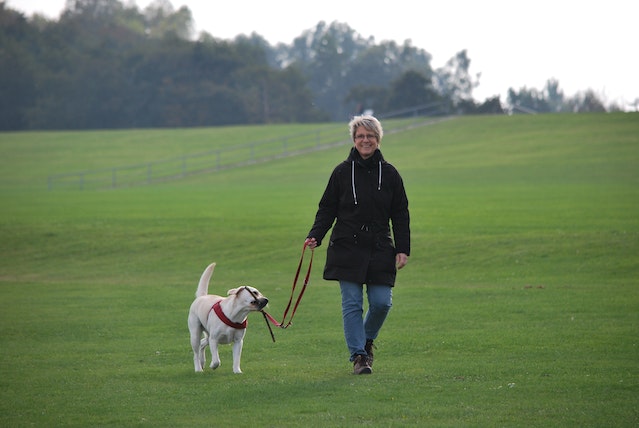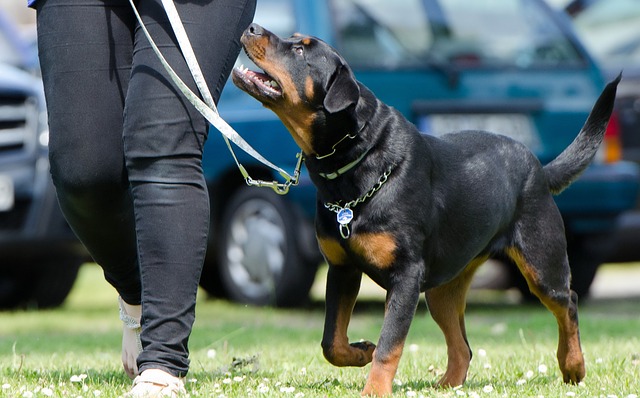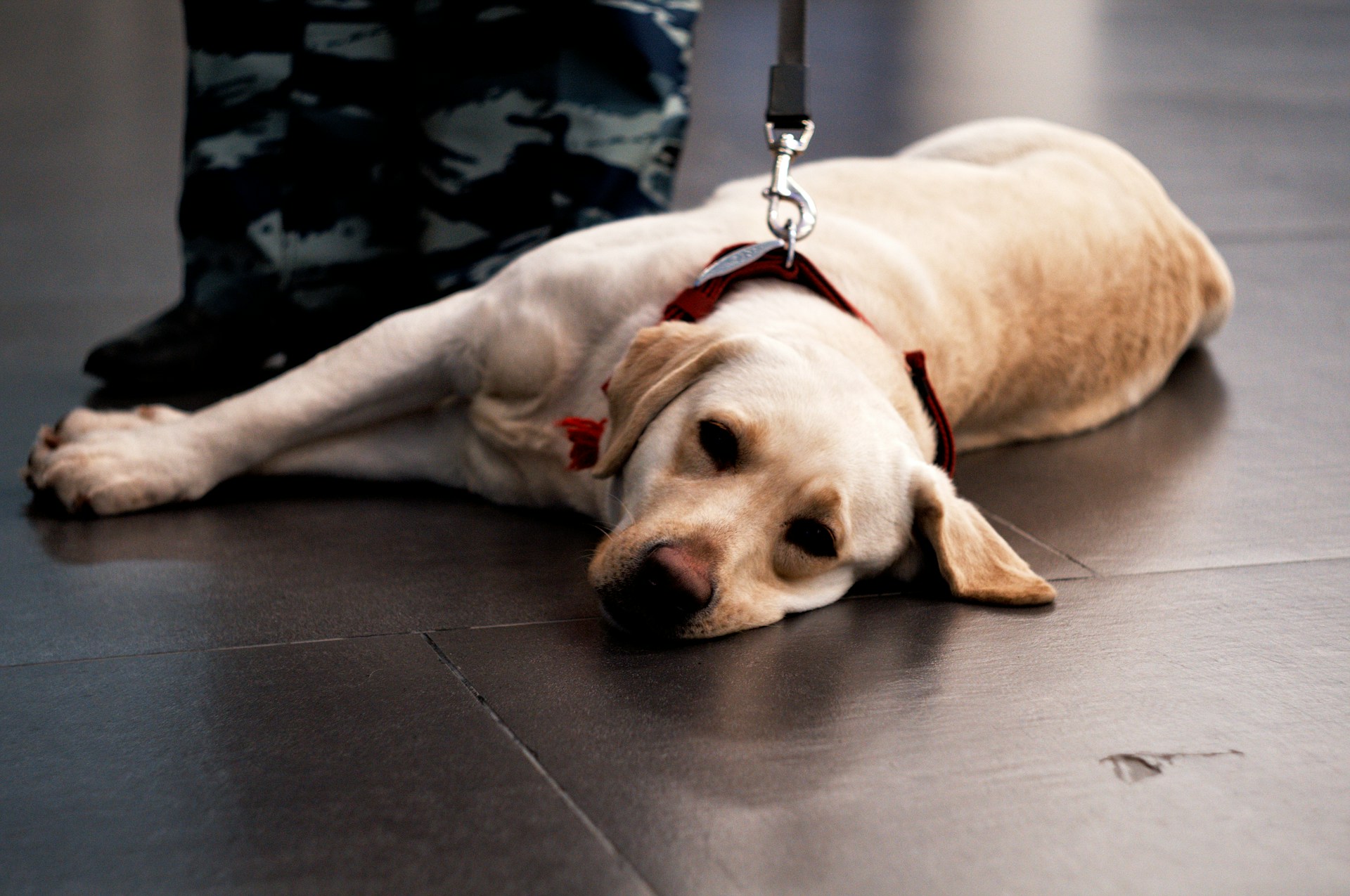





An autism assistance dog is a specially trained working dog that performs tasks which directly mitigate the effects of autism, improving safety, emotional regulation, independence, and access to public spaces. Autism service dogs help their handlers access shops, restaurants, medical care facilities, and government buildings more easily and safely. According to the National Autistic Society, these dogs help with anxiety, sensory overload, safety, social interaction, and daily living. These specially trained dogs have legal protections for housing, travel, accommodation, and public access. The Equality Act 2010 affirms that assistance dog teams have the right to enjoy all publicly available services. Of course, some reasonable restrictions are placed when it comes to having dogs in food processing facilities, zoos, saunas, swimming pools, and protected wildlife reserves.
Common tasks that the autism assistance dogs perform for their handlers include:
- Deep‑pressure grounding during sensory overload.
- Interrupting harmful or repetitive behaviours.
- Preventing bolting / improving road safety.
- Guiding to exits during overwhelm.
- Supporting transitions and routines.
- Acting as a social bridge in public settings.
- Helping a child with autism cope with unfamiliar surroundings.
How Much Is an Autism Assistance Dog in the UK?
There is no single fixed price, because UK organisations operate differently. Some charities provide dogs free of charge to families, such as "Helpful Hounds Assistance Dogs". Their objective is to help people achieve their maximum potential, whether that is educationally, socially, or in work opportunities. Other charities require a family contribution to support training and long‑term care. The Autism Dogs Charity explains that the programme involves extensive training, psychotherapy support, and aftercare, which is why families contribute financially. They do not publish a fixed price publicly, but UK assistance‑dog charities typically estimate £10,000–£25,000 as the real cost of training a dog over 2+ years. This is an industry‑wide figure, not specific to one charity.
Owner‑training is legal and common in the UK. Costs vary widely depending on behaviourist support, public‑access training, handler education, and required equipment. Our partners at the ServiceDog Training School offer a self-paced and entirely online psychiatric assistance dog training course that may be a good fit for you. Owner‑trained teams may spend £1,000–£5,000 per year when working with a private trainer, depending on support level, duration of the training, their individual requirements, and the learning ability of their dog. In contrast, the online programs may be much cheaper and more flexible. Owner‑training is described as the “primary realistic route” for most families due to long charity waiting lists (3–5 years).
Can You Get a Service Dog for Someone With Autism?
Yes! Autistic adults and children in the UK are legally entitled to use an autism assistance dog. Under the Equality Act 2010, any dog trained to perform tasks that mitigate a disability qualifies as an assistance dog, regardless of whether it was trained by a charity or the owner. You may want to see the brochure from the Equality and Human Rights Commission over here [PDF file]. Autism Dogs Charity accepts autistic applicants aged 4+ across England, Scotland, and Wales. They have a "Foundation Programme" for families that makes it easier to start the bonding process between an Autism Assistance Dog and their user (usually a child in the family). It is important to keep in mind that:
- Children can receive autism assistance dogs.
- Adults can receive autism assistance dogs.
- Public‑access rights apply equally to both.
Can I Train My Dog to Be an Autism Assistance Dog?
Yes! Owner‑training is fully legal and widely recognised in the UK. The Equality and Human Rights Commission states that there is no legal requirement for an assistance dog to be trained by a charity. Dogs may be trained by their owner or a specialist organisation. The same statement can be found on one of the prominent organizations for assistance dogs in the UK - the Assistance Dogs UK website. There are requirements for a legally recognised assistance dog:
- The dog must be trained to perform specific disability‑mitigating tasks.
- The dog must be safe, well‑behaved, and under control in public.
- The handler must be disabled under the Equality Act (autism qualifies).
While the UK government does not operate a registry for assistance dogs, we recommend you keep supporting paperwork for your legitimate use of an assistance dog, such as an ID card, certificate, medical letter, diagnosis statement, or any other documentation. Many families work with qualified behaviourists, professional assistance‑dog trainers, and autism‑specialist organisations to ensure the dog meets public‑access and task‑training standards. Explore your options carefully as you delve into the world of assistance dogs and check our blog for useful tips and information.