



Selecting a dog for someone on the autism spectrum is about matching temperament, training capacity, and daily needs to the person’s sensory profile and family context. Generally, calm, patient, and highly trainable breeds often work best, but that does not mean you need to be limited to purebreds. Just so you know, only fully trained service dogs (also called assistance dogs) are entitled to rights and protections in public access, housing, and travel. Therapy dogs will be treated as pets. If you are interested in training a therapy dog or an assistance dog, please check the articles linked below:
“How to Train Your Dog to Become a Therapy Dog for Children with Autism”
“How Do You Get an Assistance Dog? Step-by-Step Process and Requirements”
“Service Animals vs Emotional Support Animals vs Therapy Animals”
A word of caution: Before you look into obtaining an Autism Service Dog or a Therapy Dog, please make sure to speak to your GP to understand your options and how a dog may fit with your living conditions, lifestyle, and expectations. If you need help with locating training organizations near you, you can find additional guidance on our site.
Let’s discuss pairing individuals with ASD with suitable dogs and how the breeds on this list may be a good match for both adults and children on the spectrum.
What Is the Best Pet for Autism?
While cats have a loyal fan base, they are not a good fit for autistic individuals who may have mobility issues, difficulties with physical interactions, or exhibit repetitive behaviors. Many families agree that dogs offer the widest range of benefits for autistic children because dogs provide predictable, nonverbal social cues, tactile comfort, routine, and opportunities for joint activity. Their companionship can reduce anxiety and encourage social interaction. Smaller pets such as rabbits, guinea pigs, or hamsters can also help, depending on individual sensory preferences. However, a fluffy dog is likely the best fit when your goals are social support and active engagement.
The Best Dog for an Autistic Child
For children, breeds commonly recommended emphasize gentleness, patience, empathy, and trainability. Examples frequently cited by canine behaviorists are Golden Retrievers, Labrador Retrievers, and certain poodle crosses like Labradoodles and Goldendoodles. The breed representatives are recognized for their strong bonding instincts, intelligence, and attentiveness. You may wish to avoid herding breeds with high energy levels, such as the Border Collie, Australian Cattle Dog, and Australian Shepherd. These breeds often nip, as their natural instincts drive them to herd both children and adults. You may also wish to avoid big dogs such as Bernese Mountain Dogs, German Shepherds, and Belgian Malinois, who may be intimidating for children and cause unwanted emotional overload.
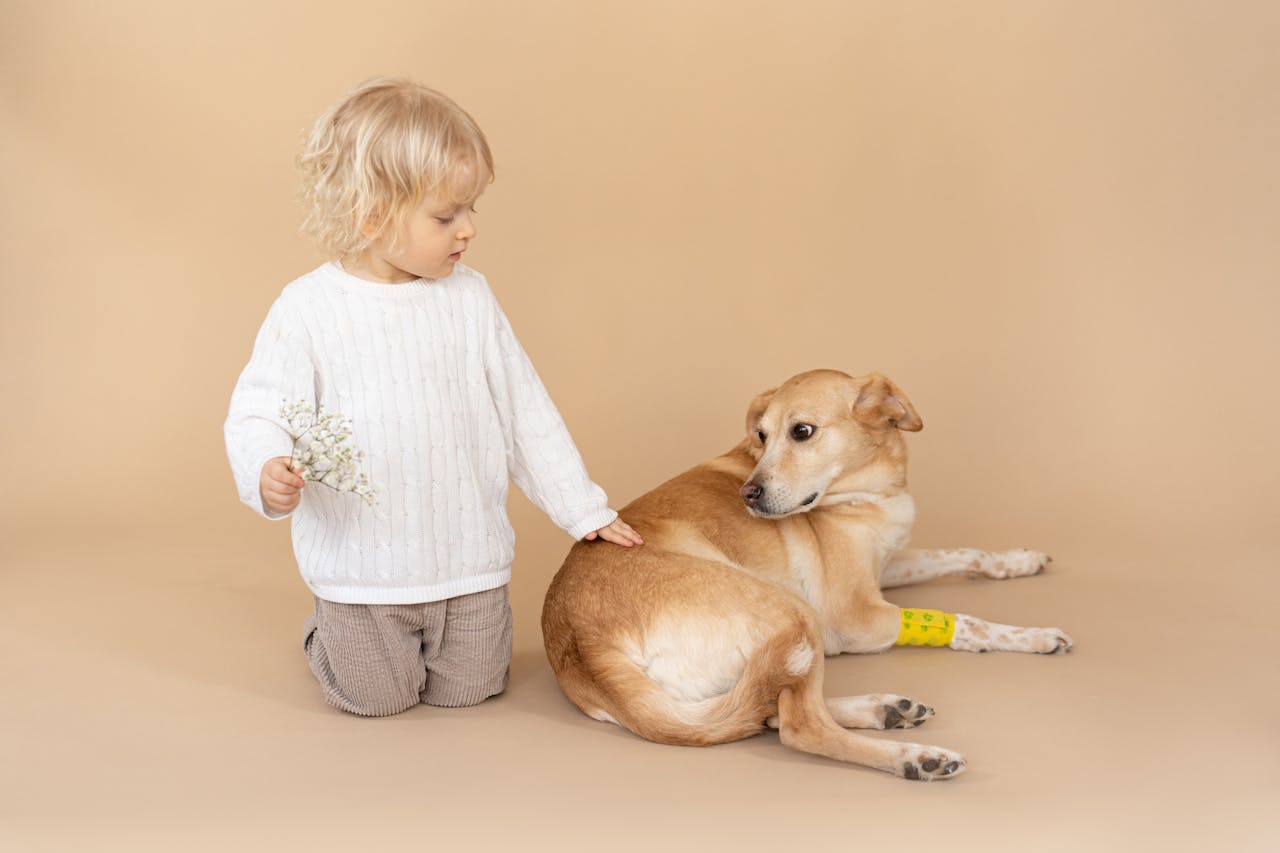
According to Noel Champagne (Senior MIRA Dog Behaviorist), pairing an autistic child with a dog can lead to improved sleep patterns and overall behavior. A partnership with a dog can often help autistic children enjoy social events and go out in public with their families more easily.
The Best Dogs for Autistic Teens
For teenagers who may need a balanced companionship, independence-building tasks, and public reliability, we would like to recommend the Standard Poodle, the German Shepherd, and the Labernese (a cross between a Labrador and a Bernese Mountain Dog. These dogs combine steadiness with adaptability and can be amazing at supporting social confidence, encouraging responsibility through care tasks, and participating in sports events. Autistic teens often struggle to connect with others and may be dealing with a lot of stress when trying to connect with their peers.
Autism service dogs and therapy dogs in general can help ASD individuals in a few key ways:
1. A canine companion can help soothe an autistic child when they are feeling overwhelmed by stimuli in their environment.
2. A well-trained Autism Service Dog can help reduce some repetitive behaviors seen in ASD individuals, like rocking back and forth for hours, fidgeting, and others.
3. The companionship of a cheerful dog can help boost confidence to interact with others.
4. Some Autism Service Dogs can be trained to aid parents in locating their children in case of emergency.
Research from Purdue University shows that service dogs can help improve the dynamics of families with autistic members. Considering there is an unwelcome stigma around the Autism Spectrum Disorder and a lack of public understanding, families are encouraged to look into adopting and training service dogs, which can help boost resilience to social pressures.
Dog Breeds for Autistic Adults
Adults can gain significant emotional and practical support from a trained autism service dog. Emotionally, these dogs provide consistent, nonjudgmental, and unconditional companionship that helps reduce anxiety, regulate mood, and lower stress levels. A predictable routine and sensory grounding (deep pressure, focused tactile contact) can help autistic adults remain calm and composed. Service dogs also act as social facilitators. A canine partner can ease transitions into public spaces, reduce social isolation, and serve as a natural conversation starter, helping adults practice social skills at a comfortable pace.
Practically, service dogs increase safety and independence. They can be trained to interrupt repetitive behaviors, block or redirect during moments of sensory overload. Dogs also reinforce structure through their natural requirement for feeding, walking, and grooming. This can build reliable daily routines that may be helpful to adults struggling with daily routines.
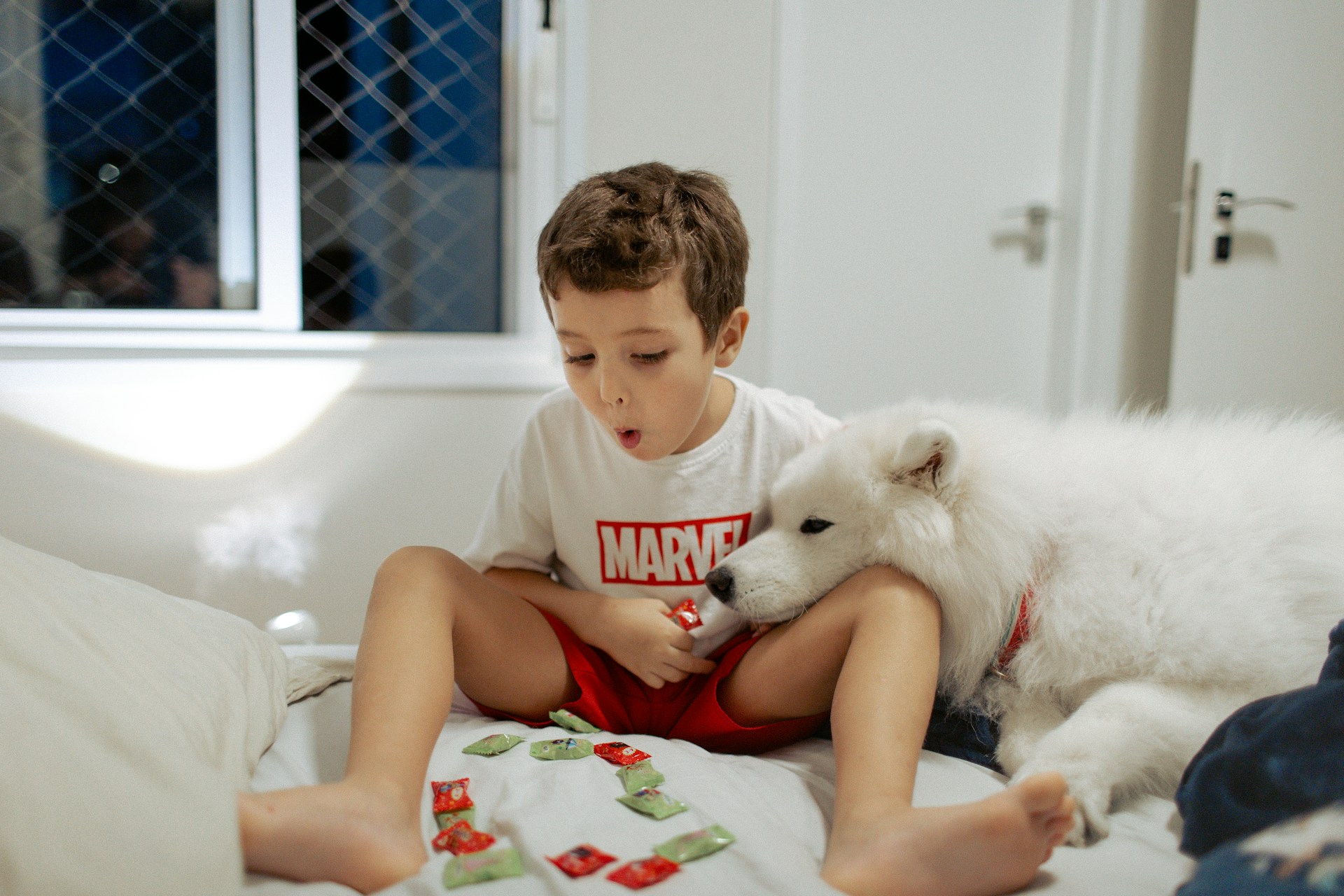
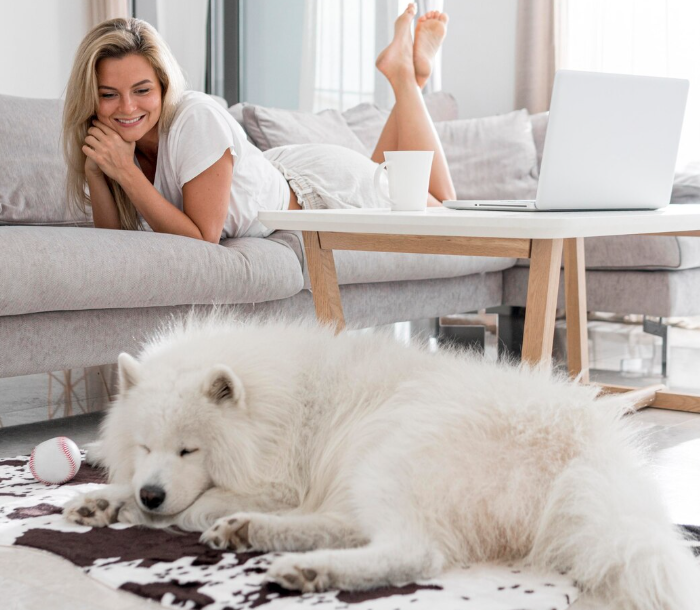
Breeds that may be suitable for autistic adults include the Samoyed, the Newfoundland, and the Staffordshire Bull Terrier. While these dogs are on the bigger side and may require a bit more commitment from their owners, they are famous for their easygoing personalities, high intelligence, loyalty, patience, and loving nature. Furthermore, adults on the Autism spectrum may consider adopting a Mutt/Mixed Breed canine if they feel a strong connection with their paw partner.
What Is Important for a Dog to Be a Good Fit?
For a dog to work well with an autistic person, whether a child, teen, or adult, it is important that the dog is kind-hearted, patient, affectionate, intuitive, and highly forgiving. Autism Service Dogs and Therapy Dogs are trained to remain calm and comfortable during unpredictable or energetic interactions that can sometimes occur with children or adults. Children can sometimes have difficulty with physical interactions, so dogs paired with them should be evaluated for their tolerance to ensure a safe and comfortable match. Of course, you should not forget that your pooch is not a robot, so you may want to stick to supervised dog-child interactions.
Adults looking to adopt a service dog should carefully consider how a new furry companion will impact their finances, work schedule, and living space. Some dogs have high energy and will need to be paired with very physically active individuals so both parties can have a good balance. As mentioned above, pairing a dog with an ASD individual is a complex process that should be handled with caution and respect for the needs of both the canine and their potential handler/user.